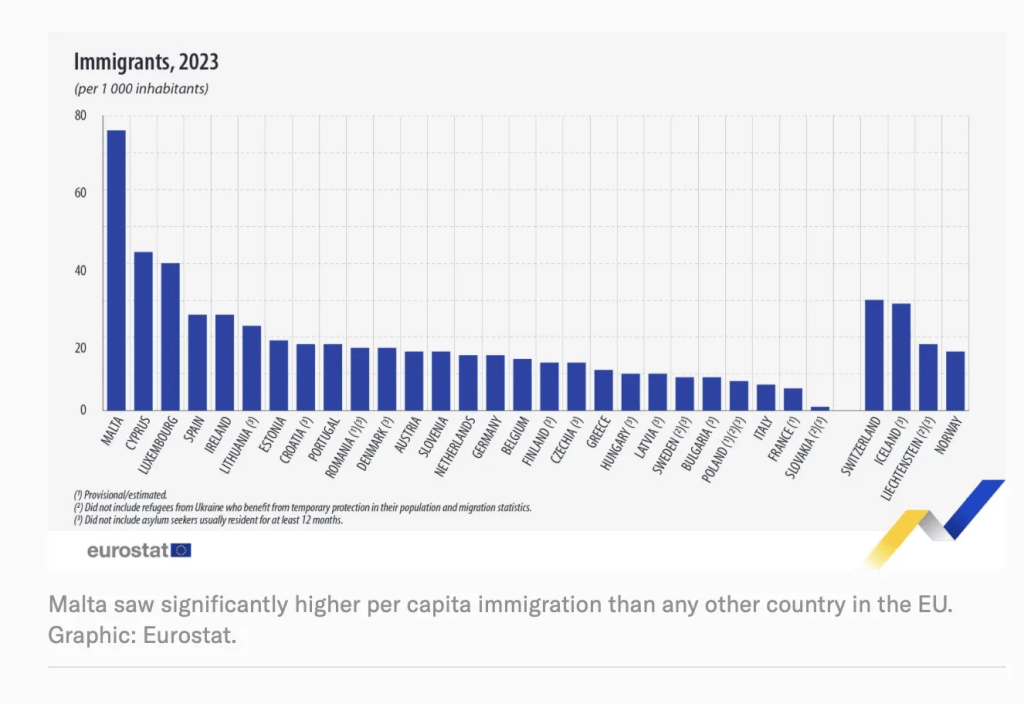
The foreign population in Malta has increased to 29.4% over the past decade (NSO, 2025). While the nation holds the highest immigration rate per capita in the EU (Eurostat, 2025), successful integration remains a complex challenge, hindered by both rising financial costs and systemic barriers.
I. Data Analysis: A System Under Pressure
Recent data from Eurostat (2025) confirms that Malta’s migrant density has reached 76 per 1,000 inhabitants, nearly double that of Cyprus (43/1000). This rapid demographic shift to a nearly 30% foreign population has placed a measurable load on national infrastructure, including healthcare and administrative services (NSO, 2025). As population density increases, a gap is forming between official integration policies and the practical experience of migrants on the ground.
II. The Role of Non-Formal Education
To address these gaps, NGOs like Blue Door Education provide essential non-formal education. Justine Lubnow, President of the organization, emphasizes that integration is not just about finding employment but about achieving “complete agency.” Her program focuses on literacy and life skills, filling the void left by more rigid, formal systems.
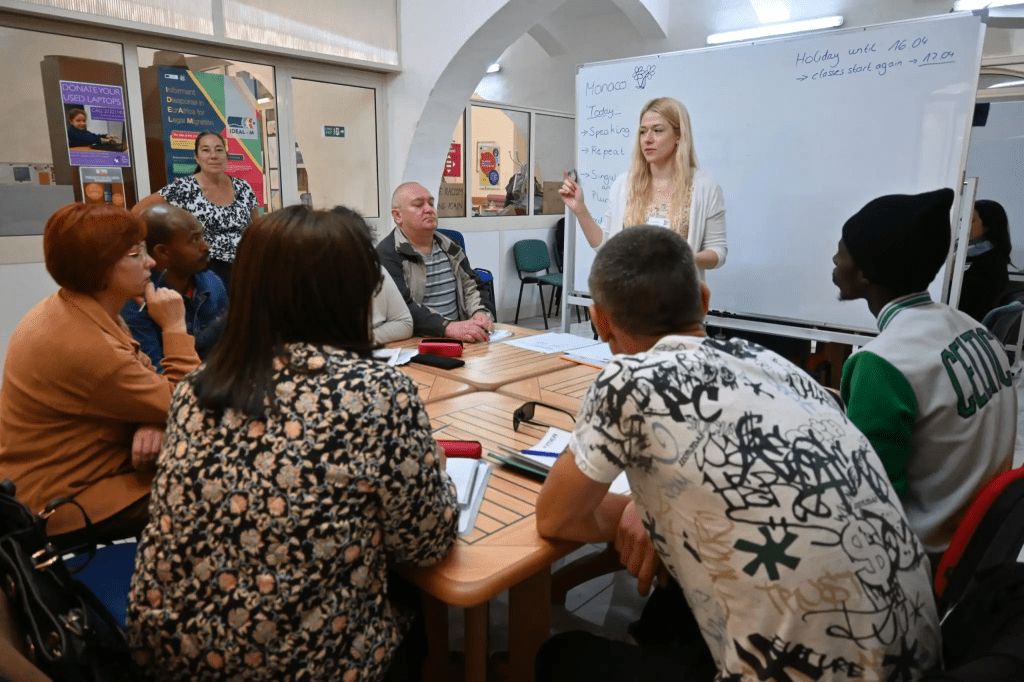
In her interview, Lubnow highlights two major non-financial barriers:
- Digital Exclusion: Many learners rely entirely on smartphones for daily life, yet much of Malta’s administrative and professional environment requires higher levels of digital literacy and hardware access.
- Unwritten Cultural Rules: Navigating the local bus system or understanding “workplace etiquette” are essential skills that are often overlooked by official frameworks but are critical for daily survival.
III. Financial Barriers: The €250 Requirement
Despite the efforts of NGOs, governmental regulatory costs are increasing. From 2026, all Third-Country Nationals (TCNs) must complete a mandatory pre-departure course before their permit is processed (Identità, 2026).
- Mandatory Fees: Industry reports from Expat Tax Malta (2026) confirm that the total cost for these required assessments is approximately €250.
- The Survival Choice: For low-income foreign workers earning the national minimum wage, €250 represents nearly one-third of their monthly net income. Lubnow suggests that more state support, such as stipends or hardware subsidies, is needed to ease these financial worries. Without such help, many workers are forced to choose between official certification and basic survival expenses.
Conclusion
Social integration should not be a “paid ticket.” As Malta navigates its status as the EU’s top immigration destination, success will depend on more than just statistics. True social cohesion requires addressing the digital divide, simplifying cultural navigation, and ensuring that financial barriers do not exclude the most vulnerable members of the workforce (NSO, 2025).
References (Harvard Style)
- Eurostat (2025) Migration and migrant population statistics: 2023 summary report. Available at: https://ec.europa.eu/eurostat/web/products-eurostat-news/w/ddn-20250328-2 (Accessed: 7 May 2026).
- Expat Tax Malta (2026) Malta’s Pre-Departure Course Explained. Available at: https://expatax.mt/maltas-pre-departure-course-explained/ (Accessed: 7 May 2026).
- Identità (2026) Expatriates Unit Single Permit – Pre-Departure Course. Available at: https://identita.gov.mt/ (Accessed: 7 May 2026).
- National Statistics Office (NSO) Malta (2025) World Population Day: Population Estimates. Valletta: NSO. Available at: https://nso.gov.mt/ (Accessed: 7 May 2026).


Leave a Reply